
When it comes to running a successful SaaS business, your customer support model can make or break the experience your users have. You want to provide help that’s quick, effective, and tailored to your customers’ needs—but how do you choose the right approach?
Whether you’re aiming to reduce churn, boost satisfaction, or streamline your support team’s efforts, understanding the different SaaS customer support models is key. You’ll discover the most effective support strategies designed specifically for SaaS, so you can find the perfect fit for your business and keep your customers coming back.
Ready to transform your support game? Let’s dive in.
Credit: www.collidu.com
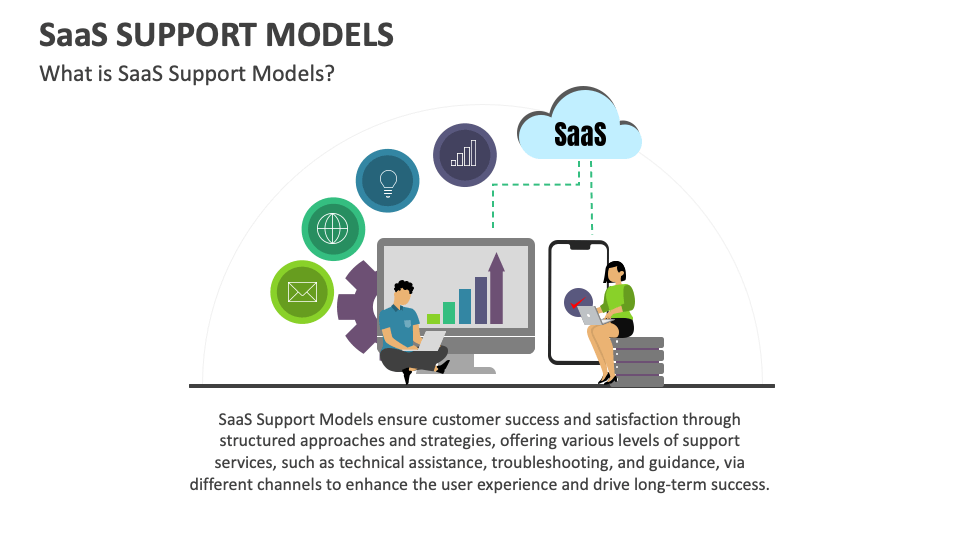
Saas Support Models
SaaS companies depend on strong customer support to keep users happy and loyal. Support models shape how teams help customers solve problems and get value. Each model fits different types of businesses and user needs. Choosing the right support approach improves satisfaction and reduces churn.
Tiered Support Model
The tiered support model organizes help into levels or tiers. Basic issues go to Tier 1, handled quickly by frontline agents. More complex problems move up to Tier 2 or Tier 3 experts. This structure saves time and matches skills to issue difficulty. Customers get faster answers without overloading advanced staff.
Low-touch Support
Low-touch support relies on minimal direct interaction with customers. It uses self-service tools like FAQs, guides, and chatbots. Users find answers on their own without waiting for agents. This model suits simple products or users who prefer independence. It lowers support costs and scales easily.
High-touch Support
High-touch support involves close, personal attention from support staff. Agents build relationships and offer tailored help. This model fits complex SaaS products or high-value clients. It increases customer loyalty by showing care and responsiveness. The approach needs more resources but improves retention.
Collaborative Support
Collaborative support connects customers, support teams, and product teams. It encourages feedback and shared problem-solving. Customers can access forums or communities for peer help. Support and product teams work together to fix issues and improve features. This model boosts transparency and continuous improvement.
Automated Support
Automated support uses technology to handle common requests. Chatbots, AI tools, and automated ticketing speed up responses. It works well for repetitive tasks and off-hours support. Automation frees human agents to focus on complex problems. This model enhances efficiency and availability.
Credit: www.collidu.com
Key Support Channels
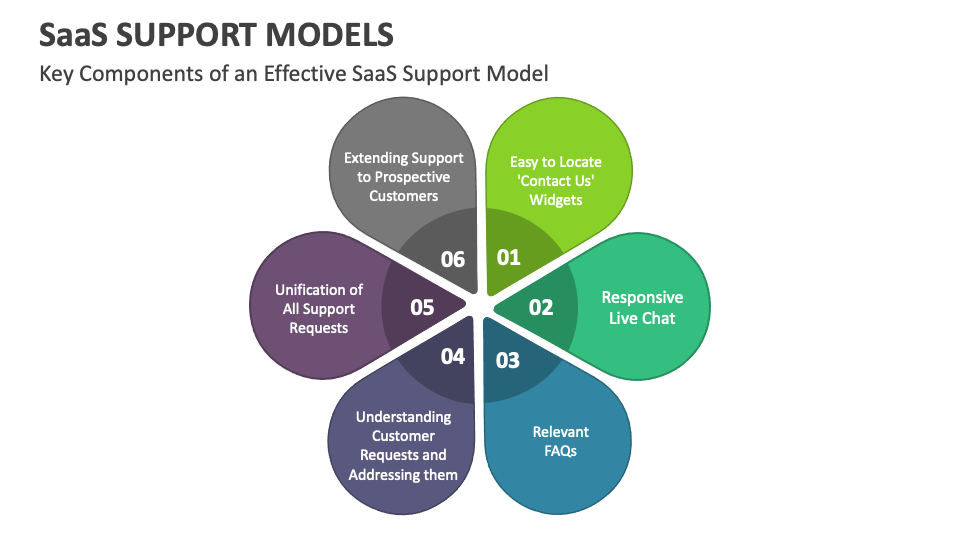
Choosing the right support channels is vital for SaaS businesses. These channels connect users with help quickly. They improve customer satisfaction and build trust. Different users prefer different ways to get support. Offering multiple channels ensures everyone finds an easy option. Below are key support channels used in SaaS customer support models.
Live Chat
Live chat allows real-time conversations between users and support agents. It offers quick answers and solves problems fast. Users like live chat for its convenience and speed. It reduces waiting time compared to email or phone. Many SaaS companies use live chat on their websites and apps.
Chatbots
Chatbots provide instant support using automated messages. They handle simple questions 24/7 without human agents. Chatbots guide users through common tasks and issues. They reduce the workload for support teams. Advanced chatbots can learn from interactions and improve over time.
Email Support
Email support is a traditional and widely used channel. Users send their questions or problems in detail. Support teams reply with solutions or follow-up questions. Email works well for complex issues needing time to investigate. It also creates a written record for both sides.
Phone Support
Phone support offers direct voice communication with support staff. It helps with urgent or complicated problems. Users appreciate hearing a human voice and getting immediate help. Phone support requires trained agents and can be costly. Many SaaS companies provide phone lines during business hours.
Self-service Portals
Self-service portals give users access to guides, FAQs, and tutorials. They help customers solve problems independently anytime. These portals reduce support requests and save time. Clear and updated content is key to effective self-service. Users enjoy quick fixes without waiting for a reply.
Community Forums
Community forums connect users to share tips and solve problems together. They create a space for peer-to-peer support and discussions. Forums help build a loyal user base and gather feedback. Support teams can monitor forums to spot issues early. Active communities improve customer engagement and satisfaction.
Personalization Techniques
Personalization techniques are essential in SaaS customer support. They help create meaningful connections with users. These techniques make customers feel valued and understood. This leads to higher satisfaction and loyalty. Personalization is not just about using a name. It involves understanding customer needs and preferences. Support teams can tailor their approach to each segment. This improves communication and resolves issues faster. Below are key personalization techniques used in SaaS support models.
Customer Segmentation
Customer segmentation divides users into groups based on traits. These traits include behavior, industry, or subscription level. Segmentation helps support teams focus on specific needs. It allows customized solutions for each group. For example, enterprise clients may need more hands-on support. Startups might prefer self-service options. Segmentation ensures resources match customer expectations. It also improves efficiency in handling requests.
Tailored Communication
Tailored communication adapts messages to individual customers. This can be through email, chat, or phone. Using customer data, support reps speak in a relevant tone. They address specific issues users face. Clear and simple language builds trust and clarity. Tailored communication avoids generic responses that frustrate users. It shows that the support team listens closely. This technique speeds up problem solving and boosts engagement.
Proactive Engagement
Proactive engagement means reaching out before problems arise. Support teams use data to predict potential issues. They contact customers with helpful tips or alerts. This prevents frustration and downtime. Proactive support also includes follow-ups after resolving tickets. It reassures customers that their satisfaction matters. Engaging early and often creates a positive experience. This approach reduces support tickets and strengthens relationships.
Support Metrics To Track
Tracking the right support metrics is essential for any SaaS company. These numbers show how well your customer support team performs. They help find issues and improve service quality. Monitoring these metrics regularly guides better decision-making and boosts customer loyalty.
First Response Time
First Response Time measures how fast support replies to customers. A quick first reply builds trust and reduces frustration. Shorter response times often lead to higher satisfaction rates. This metric helps identify delays in your support workflow.
Customer Satisfaction Score
Customer Satisfaction Score (CSAT) shows how happy customers feel after support interactions. It is usually gathered through simple surveys. High CSAT scores reflect effective and friendly support. Tracking CSAT helps improve service and address weak points.
Net Promoter Score
Net Promoter Score (NPS) measures customer loyalty and likelihood to recommend your product. It asks customers to rate you on a scale from 0 to 10. High NPS means strong customer relationships and brand trust. NPS trends reveal long-term support success.
Churn Rate
Churn Rate tracks how many customers stop using your SaaS. Support plays a big role in keeping churn low. A rising churn rate signals dissatisfaction or unresolved problems. Reducing churn improves revenue and company growth.
Resolution Time
Resolution Time shows how long it takes to solve customer issues. Faster resolutions improve customer experience. This metric helps spot bottlenecks and improve team efficiency. Keeping resolution times low boosts overall support quality.
Strategies To Improve Support
Improving SaaS customer support requires clear, effective strategies. These methods help teams respond faster and solve problems better. Strong support builds trust and keeps customers happy.
Focus on training, technology, customer feedback, and consistent communication. Each area plays a key role in enhancing support quality. Let’s explore how to make support stronger and smarter.
Training And Development
Support teams need regular training to stay sharp. Teach them product knowledge and problem-solving skills. Role-playing common issues helps prepare for real calls. Continuous learning boosts confidence and speeds up resolution times. Make training a routine, not a one-time event.
Leveraging Ai And Automation
Use AI tools to handle simple queries quickly. Chatbots can answer FAQs 24/7, freeing agents for complex issues. Automation speeds ticket routing and follow-ups. It reduces wait times and improves customer satisfaction. Always balance AI use with human support for best results.
Integrating Feedback Loops
Collect customer feedback after each support interaction. Use surveys and ratings to gauge satisfaction. Analyze feedback to find pain points and improve processes. Share insights with the team to fix recurring problems. Feedback loops turn complaints into growth opportunities.
Multi-channel Consistency
Customers reach out via chat, email, phone, or social media. Provide consistent answers across all channels. Use a unified system to track conversations and history. Agents must have access to the same data for smooth replies. Consistency builds trust and reduces customer effort.
Challenges In Saas Support
SaaS customer support faces unique challenges that can affect user satisfaction and retention. Support teams must manage growing demands while keeping service efficient and personal. These hurdles require careful planning and smart strategies.
Scaling Support Teams
As a SaaS product grows, support requests increase quickly. Hiring more agents helps but brings training and coordination challenges. Maintaining fast response times with a larger team is tough. Teams must stay aligned on product updates and support standards.
Handling Complex Issues
SaaS products often have technical features that create tricky problems. Support staff need strong product knowledge to solve these issues. Some problems require deep analysis or developer help. Ensuring customers get clear, helpful answers is critical.
Maintaining Service Quality
Consistent quality is key for SaaS support success. Teams must deliver accurate, polite, and timely responses every time. Monitoring support interactions and gathering feedback helps identify gaps. Continuous training and process improvements keep standards high.
Balancing Automation And Human Touch
Automation speeds up common tasks and answers simple questions. Yet, some cases need a human to understand and empathize. Finding the right mix avoids frustrating customers with robotic replies. Personalized support builds trust and loyalty.
Future Trends In Saas Support
The future of SaaS customer support is evolving fast. New technologies and customer expectations shape how companies deliver help. Support teams must adapt to stay effective and efficient. This evolution focuses on smarter tools and better user experiences. It changes how support is offered and how users get answers.
Ai-driven Insights
Artificial intelligence analyzes large data sets to find patterns. It helps support teams understand customer issues quickly. AI tools suggest solutions before problems grow. These insights improve response times and accuracy. Support agents get guidance to solve cases faster and with less effort.
Increased Self-service Adoption
Many customers prefer solving problems on their own. Self-service options like FAQs and knowledge bases grow in importance. Interactive guides and chatbots provide instant help. Users find answers anytime without waiting for support staff. This reduces the load on support teams and speeds up service.
Omnichannel Experiences
Customers expect consistent support across channels. Companies combine email, chat, phone, and social media into one system. This creates a seamless experience no matter the contact method. Support agents see all customer interactions in one place. It helps deliver personalized and efficient service every time.
Predictive Support Models
Predictive support uses data to forecast customer needs. It anticipates issues before customers report them. Companies fix problems proactively, improving satisfaction. This approach reduces downtime and builds trust. Predictive models rely on machine learning and continuous data analysis.
Credit: www.givainc.com
Frequently Asked Questions
What Are The Common Saas Customer Support Models?
Common SaaS customer support models include tiered support, self-service portals, automated chatbots, and high-touch personalized support. Each model caters to different customer needs and scales according to business size and complexity.
How Does Tiered Support Work In Saas?
Tiered support involves escalating customer issues through multiple levels. Basic problems are solved at the first level, while complex issues move to specialized teams. This ensures efficient resolution and optimal use of support resources.
Why Is Self-service Important In Saas Support?
Self-service allows customers to solve issues independently through FAQs, knowledge bases, or community forums. It reduces support costs, speeds up resolution, and enhances customer satisfaction by providing instant access to information.
What Role Do Chatbots Play In Saas Customer Support?
Chatbots handle common queries instantly, offering 24/7 assistance. They improve response times, free up human agents for complex tasks, and contribute to a seamless customer experience.
Conclusion
Choosing the right SaaS customer support model shapes user satisfaction. Fast responses keep customers happy and loyal. Self-service options reduce wait times and empower users. Personalized help builds trust and improves retention. Clear communication avoids confusion and solves problems quickly.
Testing different models helps find the best fit. Remember, support quality directly impacts your SaaS success. Keep support simple, helpful, and user-focused to grow steadily.